RuggedRides Export
 English
 Français
 العربية
 Português
 Русский
 Español
 Deutsch
 Indonesia
For overseas dealers and fleet buyers sourcing pickups or 4x4 SUVs from China, the exporter you choose shapes everything that follows: vehicle condition, document accuracy, payment security and how quickly problems get resolved. This post sets out a practical way to tell a properly registered exporter from an informal broker, and how to structure an order so the risk stays on the right side of the table.
What “licensed” actually means in China
In China, “licensed” can describe two different things. The first is a company whose business license includes vehicle trading and export within its registered scope. The second is a company holding foreign trade operator registration, which is the legal basis for exporting goods and clearing customs. Neither, on its own, proves the company specialises in vehicles.
For a buyer, the practical meaning is simpler: a licensed exporter can sign a contract, issue a commercial invoice, handle customs formalities and deal with shipping lines, inspection bodies and banks in its own name. An unlicensed operator typically acts as a broker, connecting you to a licensed company while adding a margin and little accountability.
Regulation of used vehicle exports in China has tightened in recent years, with registration requirements and criteria that make serious exporters easier to verify. Informal operators still exist, particularly on marketplaces and social channels, so verification remains your job.
Risks of working with an unlicensed intermediary
- Payment exposure: without a verifiable corporate entity, recourse after a deposit is limited.
- Condition surprises: brokers may not inspect units, and undisclosed damage or mechanical faults surface only at destination.
- Document defects: export invoice, packing list, bill of lading or certificate of origin that do not match the shipment can cause delays, penalties or seizure.
- No after-shipment support: once the vessel sails, an informal operator is unlikely to assist.
- Unusual payment routes: requests for personal accounts or untraceable transfers raise both commercial and compliance concerns.
Low headline prices are the usual hook. The correct comparison is total landed cost and risk, not the quoted unit figure.
How to verify an exporter before you commit
- Business license: request a copy and check the registered scope, legal representative and registered capital against the official market regulation database.
- Foreign trade registration: ask for the registration details required for customs clearance and confirm them with the relevant authority.
- Physical presence: confirm the company has an actual operating address and, where relevant, vehicle stock it can show.
- Document trail: ask for sample export documents and past shipping records rather than testimonials.
- Contract terms: a proper contract names the vehicle, stock number, specification, price basis, payment schedule and document set.
Run these checks on every supplier, including established ones. A supplier that resists verification is telling you something.
Payment structure that protects both sides
Licensed exporters generally work through traceable corporate channels: bank transfer to a company account, and letters of credit for larger orders. The exact instruments available, and any minimum order thresholds, are confirmed by the export desk per order.
Whatever the method, insist on a written payment schedule tied to milestones: deposit against a signed contract, balance against document copies or bill of lading, as agreed. Avoid personal accounts, cash arrangements and any request to split payments in ways that obscure the counterparty.
Inspection before deposit
Third-party inspection before deposit is available on RuggedRides Export orders. Use it. For new pickups and 4x4 SUVs, inspection confirms specification, configuration and condition before funds move. For used units, it is more important still.
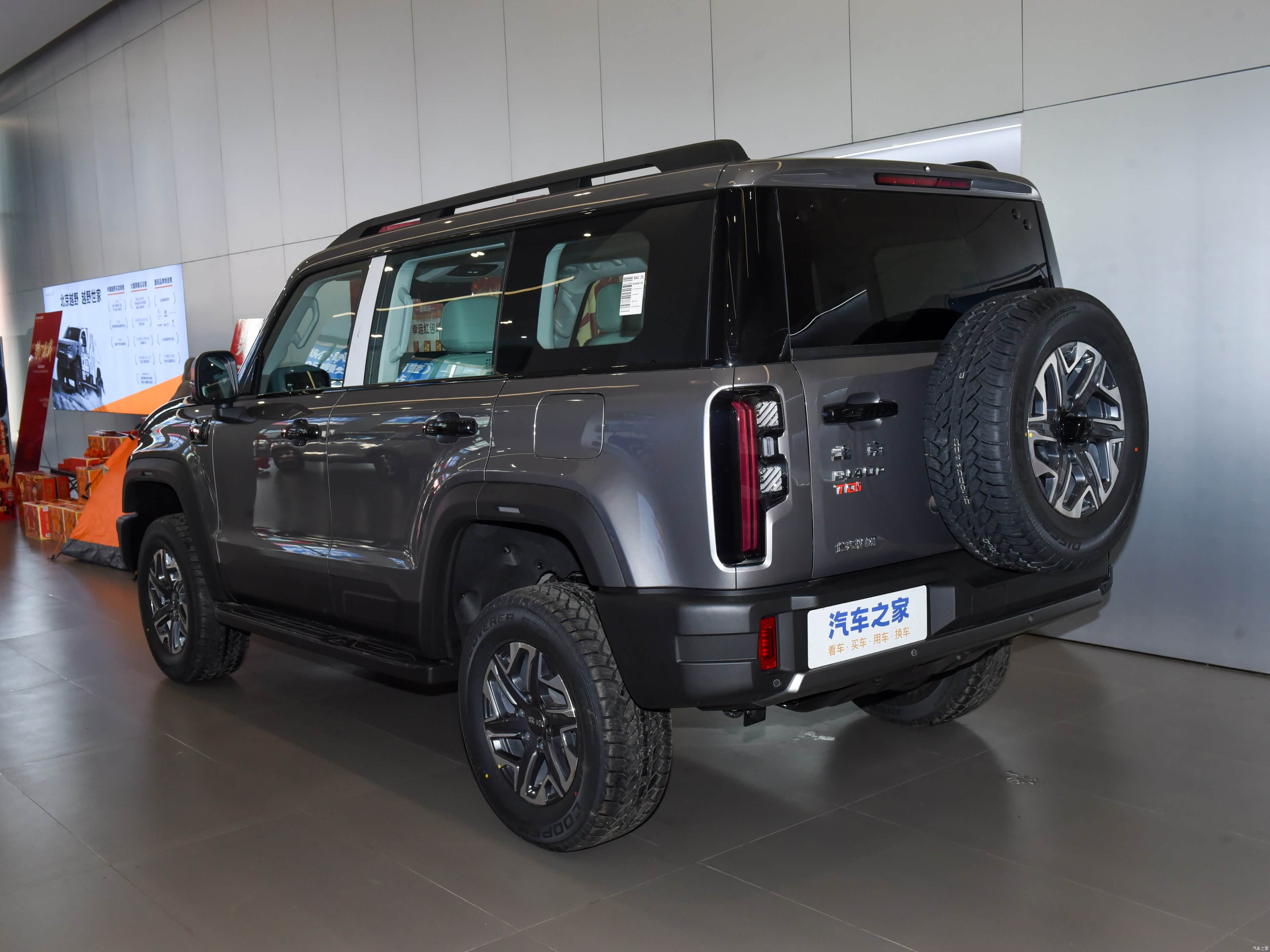
Our physical used LHD 4x4 stock includes Tank 300, Prado (2016–2019), BJ40, Land Cruiser, Patrol, Wrangler and Gladiator, each carrying a stock number and real photographs. You can review the current line-up on the used LHD 4x4 stock page and request inspection of a specific unit before committing. Used units are price on request; the export desk confirms figures per order.
New versus used: what the paperwork looks like
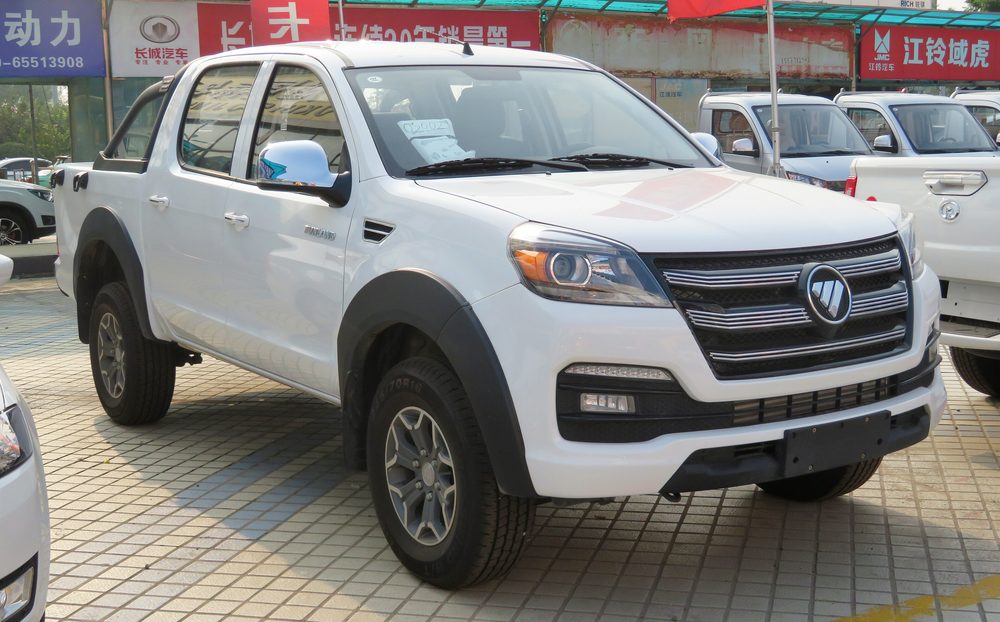
New China pickups and 4x4 off-road SUVs from brands including GWM, JAC, Foton, Dongfeng, JMC, Maxus, ZX Auto and Changan are quoted on an FOB basis, with ranges confirmed by the export desk for your specification and quantity. Browse pickups and 4x4 SUVs for model context, or look at individual units such as the Tank 300 4x4, BAIC BJ40 4x4, Nissan Patrol, Land Cruiser 300 / Prado 250 and Land Cruiser 70. Used Prado units are listed at used Prado.
Every order ships with the core document set: export invoice, packing list, bill of lading and certificate of origin. Destination-specific requirements vary, and the export desk confirms what applies to your market before shipment.
Logistics and destination requirements
Shipping a vehicle involves booking container or RoRo space, inland transport to port, customs clearance and ocean freight. A licensed exporter coordinates these steps and can advise on destination certification requirements, which differ by country and are confirmed per order.
Transit times, freight figures and port charges vary with route, season and vessel availability. Rather than rely on generic numbers, ask for a route-specific quotation. Our destinations pages outline the 30 markets we serve across Africa, the Middle East, Central Asia and Latin America, and the landed cost calculator helps you frame the estimate before the desk confirms final figures.
Cost comparison: look past the headline price
Unlicensed operators often quote below the market. The gap is usually recovered through undisclosed documentation or processing fees, repair costs on misrepresented vehicles, storage or penalty charges from incorrect paperwork, and the absence of any after-sales support.
Ask every supplier for a complete quotation showing vehicle price, document set, inland transport, freight basis and any destination charges, with the price basis stated clearly. A transparent quote is easier to compare than a single number.
A short pre-order checklist
- Verify business license and foreign trade registration.
- Confirm the company has physical stock or a verifiable supply route.
- Request real photos and stock numbers for used units.
- Arrange third-party inspection before deposit.
- Sign a contract naming the vehicle, specification and document set.
- Pay only to a corporate account under an agreed schedule.
- Confirm destination certification requirements before booking.
RuggedRides Export is operated by Anhui Zhongsu Luosi Automobile Sales Co., Ltd in China. All vehicles supplied are left-hand drive; we do not supply RHD. Duty rates, VAT, transit times and warranty terms vary by order and are confirmed by the export desk.
Next steps
If you are sourcing pickups or 4x4 SUVs for a dealership or fleet, start with the import process overview and our answers section, then send your specification, quantity and destination port through the contact page. The export desk will confirm pricing, documentation and inspection arrangements for your order.